The Literary Sci-Fi Reader
You reach for slow-burning certainty that something fundamental has already failed.
A curated taste example. Science fiction as a lens for ideas, not spectacle. Interested in what the premise forces the characters to become.
0 followers
·
0 following
Your Taste DNA
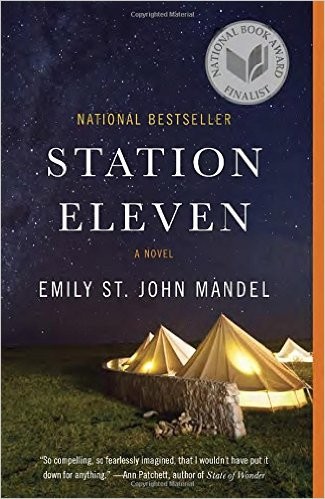
Your highest-rated books share a specific structural mechanism: horror or wrongness that is already in progress when the story begins, accumulating through atmosphere or evidence rather than arriving as event. Solaris opens with an ocean that has already resisted every human framework for a century. Never Let Me Go places you inside a system so naturalized it never needs to announce itself. Station Eleven begins after the collapse. You are drawn to the sensation of inhabiting something that cannot be stopped or explained from the inside — and you want enough narrative distance to feel the full weight of that, not to be shocked by it.
A second strong axis is epistemic: you are drawn to narratives where the act of knowing is itself compromised or impossible. Blindsight builds its entire architecture around the question of whether consciousness is even a reliable tool for perceiving reality. Solaris makes alien-human communication not just difficult but structurally foreclosed. The Left Hand of Darkness puts a human observer inside a culture whose basic categories he lacks the organs to understand. For you, the most productive narrative tension is not conflict between people or factions but conflict between a mind and the limits of what it can access.
Your nonfiction choices reveal a third, orthogonal preference: when horror is documented rather than imagined, you want the accounting to be precise and prosecutorial. From Boycott to Annihilation and The Ancient Church both deliver systematic, evidence-driven exposure of institutional destruction, with no softening and no ambiguity about agency or causality. The Road to Serfdom operates by the same cold logical mechanism. You reach for this mode as a complement to the dread of your fiction — one dissolves certainty, the other enforces it.
Blind spots
-
Kazuo Ishiguro's The Remains of the Day applies the same emotional-containment mechanism as Never Let Me Go to institutional complicity — a narrator whose formal, repressed voice is itself the evidence of what the system took from him, and who reconstructs the past in a way that only slowly reveals how thoroughly he collaborated in his own diminishment.
-
Arthur Koestler's Darkness at Noon belongs exactly at the intersection of your institutional-violence-accounting axis and your epistemic axis: it is a prosecutorial document of how a totalitarian system uses a man's own logic to destroy him, and the central horror is that the victim cannot locate the flaw in the argument being used against him.
-
Ursula K. Le Guin's The Dispossessed extends the anthropological slow-burn of The Left Hand of Darkness into a full systemic critique — a physicist moving between two societies whose assumptions are so embedded that neither population can see their own constraints, and where the epistemic failure is collective rather than individual.
Taste tensions
-
Solaris Corrected scores 10/10 despite sharing almost no structural DNA with your other top-rated books — it is tagged lively-self-invention, witty-voice, and bildungsroman-energy, the opposite of the slow dread and foreclosed knowledge that define your dominant pattern, which suggests either that a second, warmer taste axis exists beneath the data or that this particular book occupies a personal category the ratings list cannot capture.
-
The Road scores 9/10 despite having only three tags — post-apocalyptic, sparse, father-son — while your other 9s and 10s tend to reward layered structural complexity; its elevation suggests that when emotional stakes are stripped to bare minimum and the prose mirrors the desolation, you respond just as strongly as you do to elaborate epistemic architecture.