Where to read
We haven't mapped providers for this yet. search the web .
Taste threads
What this title is working with
TasteGraph uses signals like these to connect titles across movies, TV, books, and games. Your ratings decide which ones belong in your Taste DNA and how strongly they matter.
How cross-media recommendations work →Catalog
- Release
- 1852
Synopsis
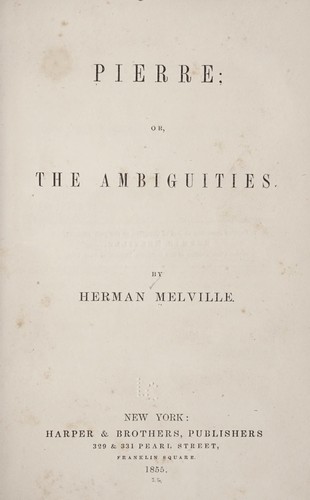
This Kraken Edition of Pierre, or The Ambiguities is a reconstruction of the text that Melville delivered to Harper & Brothers early in January 1852, just as some of the most devastating reviews of Moby-Dick were appearing. The Harper brothers apparently decided that Pierre was even more outrageous than Moby-Dick and tried to avoid publishing it by offering Melville less than half the royalties they had paid for his previous books. Accepting the humiliating contract, Melville took a self-destructive revenge. After Book XVI, he interpolated a new section on "Young America in Literature," in which he arbitrarily announced that his hero, Pierre, had been a juvenile author. Melville proceeded to add an intrusive "Pierre as author" sub-plot, disparaging American literary life and the world of publishing, which he left unassimilated into the book he had first completed. . Melville scholar Hershel Parker has long believed that the psychological stature of Moby-Dick would best be understood in the light of the original, shorter version of Pierre, in his opinion "surely the finest psychological novel anyone had yet written in English." Moby-Dick and the reconstructed Pierre are at last revealed as complexly interlinked companion studies of the moods of thought - the Typee and Omoo of depth psychology. Furthermore, all Melville lovers will be challenged by Maurice Sendak's extraordinary pictures, which constitute a brilliantly provocative interpretation of Melville's study of moral and mental ambiguities.
Why you like this
TasteGraph reads what you rate and works out why you like it, then finds matches across movies, TV, books, and games. No account needed.